How to get better at browser arcade games
The names at the top of our leaderboards don't belong to people with faster hands. They belong to people with a few good habits, and none of them are hard to pick up.
These work in nearly every game on the site. You don't need all of them. One is enough to notice a difference.
Watch where you're going, not where you are
Your own character is the least useful thing on the screen. You already know where it is. Look at the space it's about to move into, and your hands will usually sort out the rest.
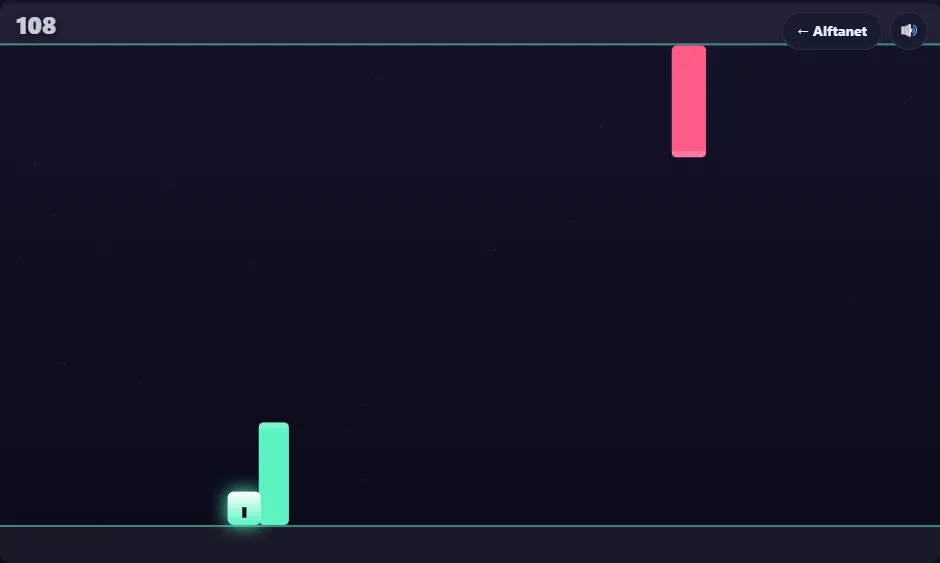
It's the same thing when a game suddenly feels too fast. You haven't got slower. You've started reacting to things once they arrive instead of seeing them coming. Moving your eyes further ahead fixes that more often than trying to press buttons quicker.
Find the beat
Most arcade games have a rhythm: how fast the enemies march, how long a jump lasts, how often a new wave arrives. Once you can feel it you stop guessing. Turning the sound on helps a lot, because a lot of that rhythm is in the audio.
Stop while you're ahead
Most personal bests come in the first few runs of a session. When scores start sliding, that's tiredness, not bad luck. Close the tab, come back later, and it's surprisingly common to beat your record on the first try.
Commit
In a lot of games a move can't be taken back once it's started. Half-jumping, or changing your mind mid-dodge, loses more runs than choosing the wrong option cleanly.
Find out what the score actually rewards
Spend one run just watching the number. You might find you've been playing carefully in a game that pays for risk, or taking risks in one that pays for staying alive. Skyguard is a good example: most people save ammo that's worth almost nothing.
A few smaller ones
- Don't fire a bomb or shield the moment it's ready. Save it for the moment that would end your run.
- Use the quiet moments between waves to get into a good position.
- Every so often, lose a run on purpose to learn something: how tight a gap you can actually fit through, how late a jump can be.
- Change one thing per session, so you can tell whether it worked.