The arcade classics that inspired our games
Waves, lives, a high-score table and a difficulty that only goes up. Nearly all of that was worked out by a handful of games around 1980, and a few of ours are built on them.
We rebuilt five of those ideas from scratch for the browser. None of them are copies. Each one starts from the original rule and then changes something.
Space Invaders (1978) → Starhive
A cannon at the bottom, rows of aliens marching down. The famous part was an accident: the aliens got faster as you shot them because the hardware had fewer of them to draw, so every wave ended in a panic. It also made the high-score table a thing people cared about.
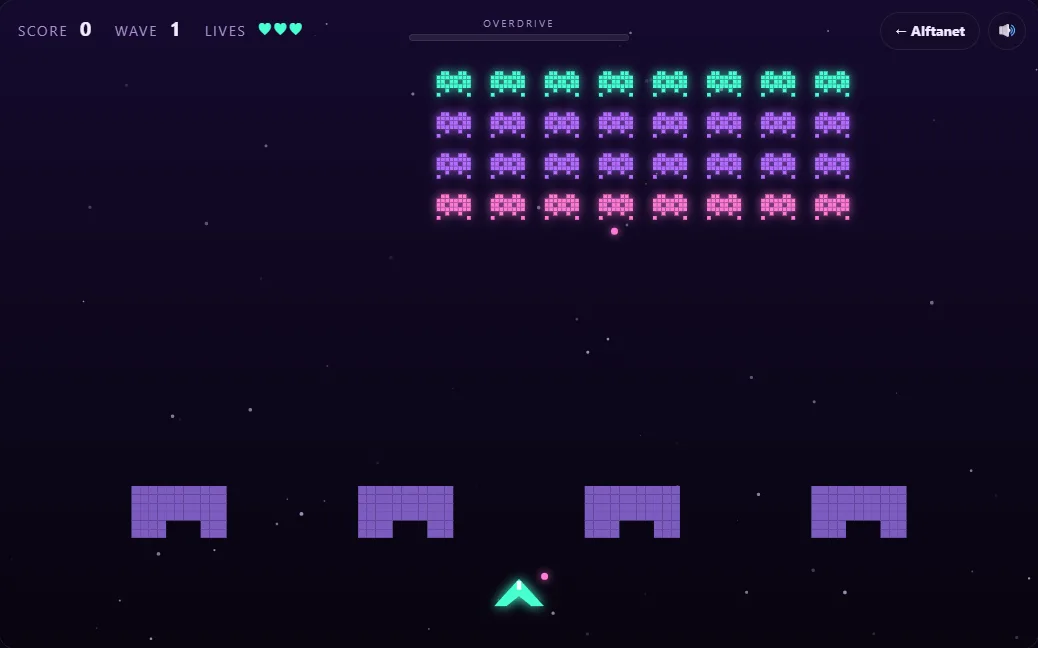
Starhive keeps the formation and the shields and adds power-ups, a charge beam and aliens that dive at you.
Asteroids (1979) → Driftbreak
Your ship keeps drifting until you thrust the other way, and the screen wraps at every edge. Shooting a big rock splits it into smaller, faster ones, so clearing the screen makes it more dangerous for a while before it gets safer.

Missile Command (1980) → Skyguard
You don't attack at all. You defend six cities from falling missiles, and you can't win, only last longer. Skyguard is our version, with smoother aiming and missiles that split in the air. We wrote a whole guide on playing it well.
Breakout (1976) → Bricklash
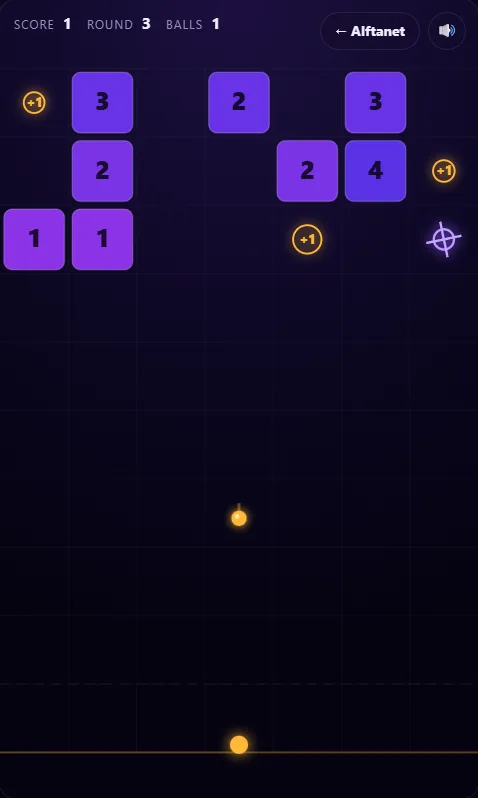
A paddle, a ball and a wall of bricks. Decades later phone games dropped the paddle, gave you a stream of balls to aim once per turn, and turned it into a puzzle about angles.
Snake → Neon Coil
One line that grows every time it eats, until your own tail is the main danger. Most people remember it from old Nokia phones. Neon Coil adds portals, speed ramps and power-ups.
What these have in common is that none of them need a story or good graphics. Each one is a single idea you understand in seconds and keep getting better at for hours. That's pretty much the job description for a game you play in a browser tab.